
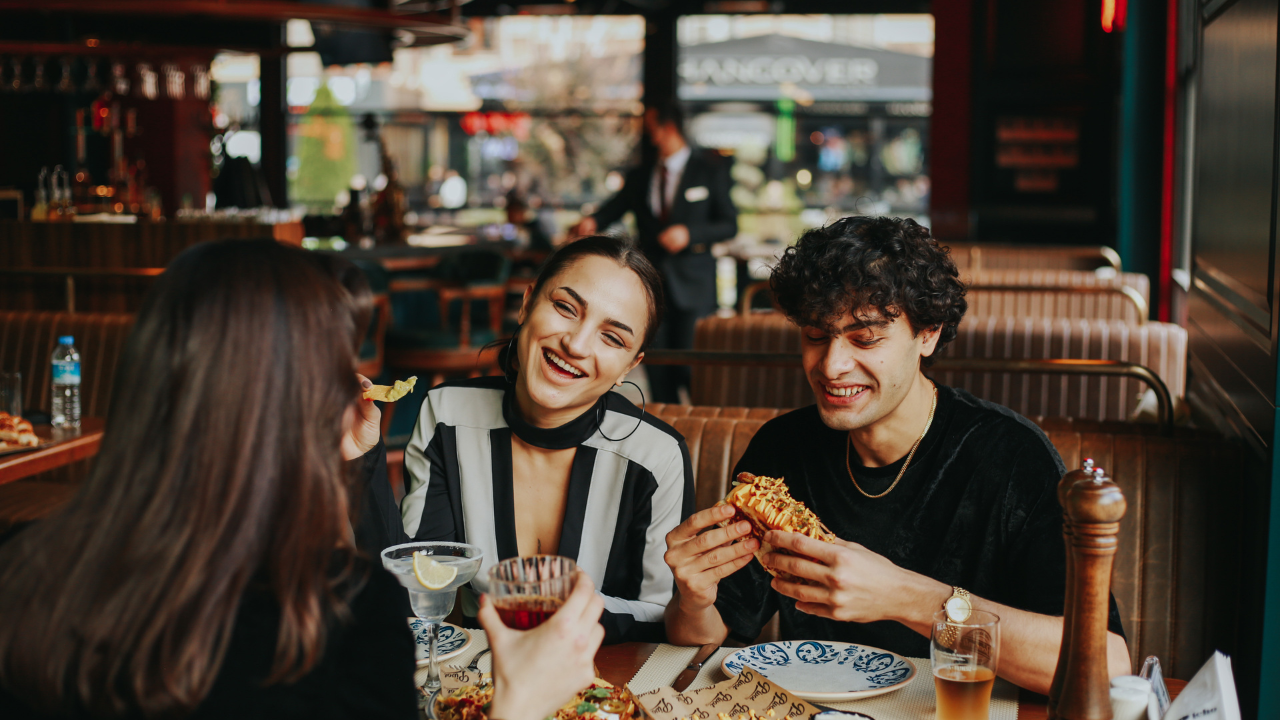
Slow eating benefits are deeply woven into European food culture, where meals are treated as meaningful experiences rather than rushed moments between tasks. In much of Europe, food isn’t something you simply “get through.”
In essence, it’s something you savor, appreciate, and make time for — a ritual that nourishes not only your body but your mindset, mood, and overall sense of presence.
When you travel through places like Italy, France, Spain, or Greece, you instantly notice it: people sit, talk, relax, taste, breathe, and enjoy. There is an elegance in the way Europe approaches food — an unspoken art that invites you to slow down and appreciate life as it happens.
Ultimately, the more I’ve experienced it myself, the more I’ve fallen in love with the quiet beauty of slowing down — of savoring life in real time instead of rushing through it.
And yes, you can bring that same beauty into your home and your daily routine.
A Journey Through the World’s Timeless Tastes
Moments That Feed the Soul
Below are some of the most iconic and refined culinary experiences every person should try at least once.
1. Parisian Patisseries — The Art of French Pastry
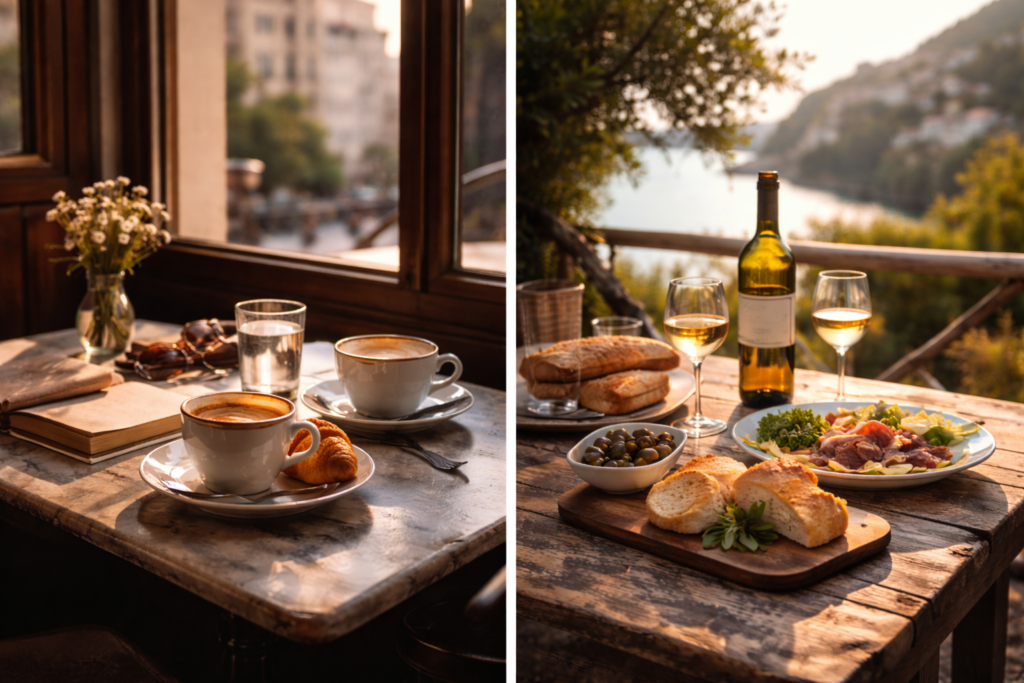
Stepping into a Parisian patisserie feels like entering a small universe of craftsmanship and beauty. Every croissant, éclair, and macaron is created with intention. You slow down because the moment asks you to — the scent of warm pastry, the quiet of the shop, the small plates, the delicate details.
This is slow living in its sweetest form.
2. Italian Alfresco Dining — Pleasure, Simplicity, and Connection
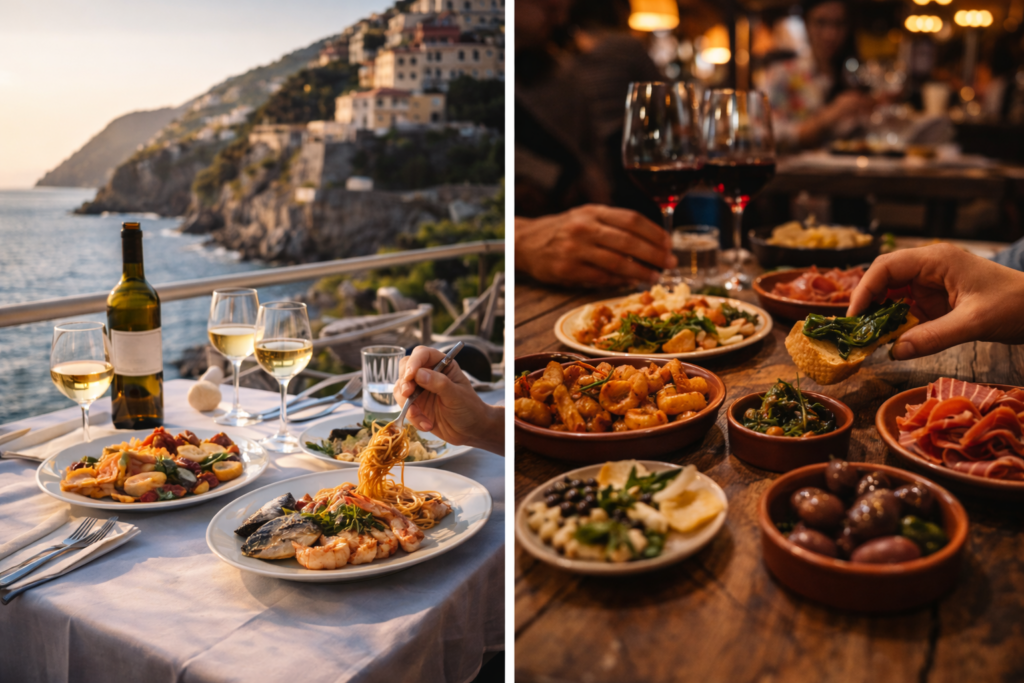
In Italy, people don’t eat while walking because food deserves your full presence. Meals unfold slowly — expressive, joyful, and filled with laughter. You sit, sip, savor, and feel the sun on your skin. Fresh pasta, seafood, olive oil, and warm bread all taste richer when you pause long enough to truly appreciate them.
3. Spanish Tapas — Sharing, Savoring, and Living in the Moment
Tapas culture is built around connection. You don’t rush through bites — you savor small plates, talk, and enjoy the experience. People stay for hours, lingering over food and wine, soaking in the atmosphere.
It’s a reminder that small portions + slow pacing = deep satisfaction.
4. Greek Seaside Meals — Fresh Food, Slow Moments, Beautiful Living
A Greek seaside table overflowing with fresh fish, lemon, herbs, olives, and warm bread is more than a meal — it’s a celebration. Greeks believe in filoxenia (hospitality), and food is always tied to warmth and connection.
Meals stretch long into the evening, reminding you that life is better when it’s not rushed.
5. European Coffee Culture — A Ritual, Not a Rush
Across Vienna, Rome, Paris, and Lisbon, you sit while drinking your coffee. No rushing, no running through the streets with a paper cup, no multitasking.
A cappuccino becomes a moment of grounding. A pastry becomes part of the ritual.
This is where slow eating meets slow living.
The Rules of Eating in Europe
(And Why They Make Life Feel More Elegant)
These simple cultural habits hold surprising slow eating benefits:
- Food is not eaten while walking
Meals are an experience, not a backdrop to movement. - Coffee is enjoyed seated, not on the go
A ritual, not an accessory. - Meals happen at the table — never in the car
Eating deserves your full attention. - Lunch breaks are real breaks
Rest + food = better digestion, better mood. - Portions are smaller but richer
Quality over quantity. - No multitasking — phones stay off the table
Presence becomes pleasure. - Meals are long, conversational, and social
Connection enhances satisfaction.
These aren’t strict rules — they’re gentle invitations to live in a way that feels more grounded, joyful, and elegant.
How Slow Eating Enhances Travel
(And Life)
When you slow down, food tastes different.
You notice flavors, textures, aromas, moments.
You feel full sooner.
You digest better.
You remember more.
Slow eating benefits aren’t just physical — they’re emotional.
This is how travel becomes more cinematic, more present, and more luxurious.
Bringing European Slow Eating Into Your Daily Life
Yes — And It Changes Everything
You don’t need a European vacation to adopt this lifestyle.
Try these simple slow eating habits:
- Sit down for every meal
- Put your phone away
- Take one breath before the first bite
- Savor flavors intentionally
- Chew slowly
- Eat in smaller portions with higher-quality ingredients
- Light a candle or create atmosphere
- Give yourself permission to enjoy
These small shifts help:
- digestion
- bloating
- hormonal balance
- skin glow
- mood
- mindfulness
And most importantly — they help you enjoy your life more.
Want to Explore the Wellness Benefits?
Slow eating doesn’t just transform the way food tastes — it changes how your body feels, how your digestion responds, and how present you feel in everyday life.
If this way of savoring meals resonates with you, you may also love my Culinary Travel Guide: Exploring Culture Through Flavor, where I dive deeper into how food traditions around the world shape the way people live, gather, and experience life.
→ Continue reading: A Culinary Travel Guide: Exploring Culture Through Flavor
I’ve written a companion wellness post that explores the digestive, hormonal, and emotional benefits of slowing down at the table, and how this simple shift can support gut health, balance, and overall well-being.
→ You can continue the journey here: The Wellness Benefits of Slow Eating
And now I’m curious —
Have you experienced a meal while traveling that made you slow down and truly savor the moment?
Or is there a culture, cuisine, or ritual you’ve always wanted to experience more intentionally?
Sometimes the most meaningful journeys begin not with a destination — but with how we choose to sit, eat, and be present.
With pleasure,









Leave a Reply