
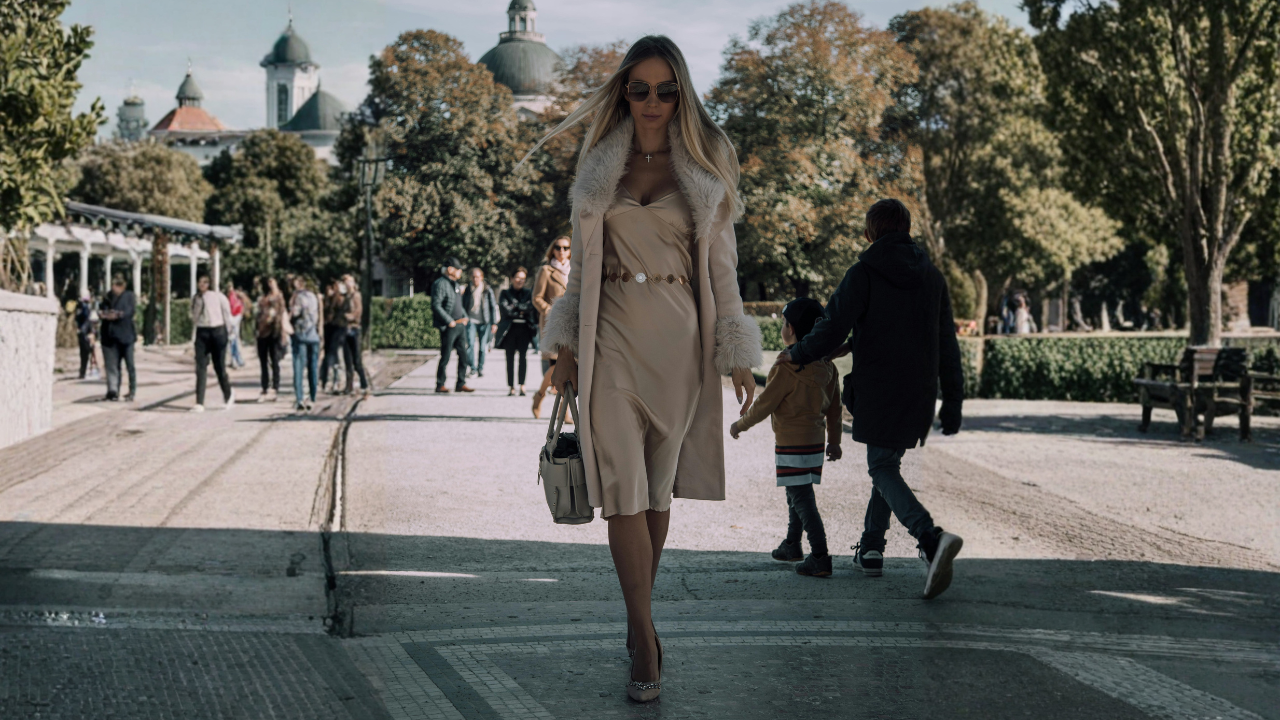
Style Confidence Begins With Proportion, Not Height
Knowing how to look taller for petite women isn’t about hiding your body—
it’s about dressing with intention so your proportions work for you.
You don’t need sky-high platforms, extreme tailoring, or shapeless trends.
Elegance is found in lines, balance, and silhouettes that respect your frame.
As someone who is petite myself, these principles completely changed how I dress. Not because I wanted to change my body — but because I wanted my clothes to work with it.
Over time, I realized these styling rules aren’t about becoming thinner or taller; they’re about creating balance and confidence. Whether you’re petite, curvy, or somewhere in between, these tips help your outfits feel intentional, flattering, and aligned with who you are.
How to Look Taller for Petite Women
Elegant Style That Brings Confidence
1. Vertical Lines Are Your Secret Weapon
Elegance rises upward.
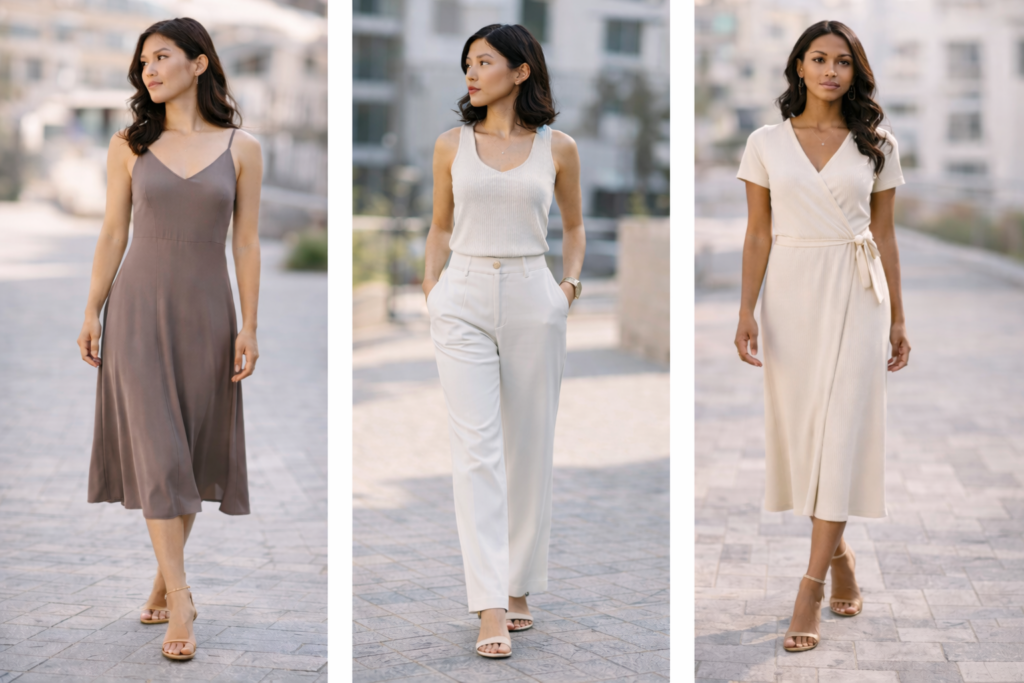
Vertical lines visually elongate:
- midi dresses
- wide-leg high-waist trousers
- column dresses
- straight-leg jeans
- jumpsuits
Patterns to avoid:
- tiny horizontal stripes
- overly busy prints
- cropped, boxy jackets
When your eye travels up and down, your body looks longer.
2. Monochrome Outfits Make You Look Taller
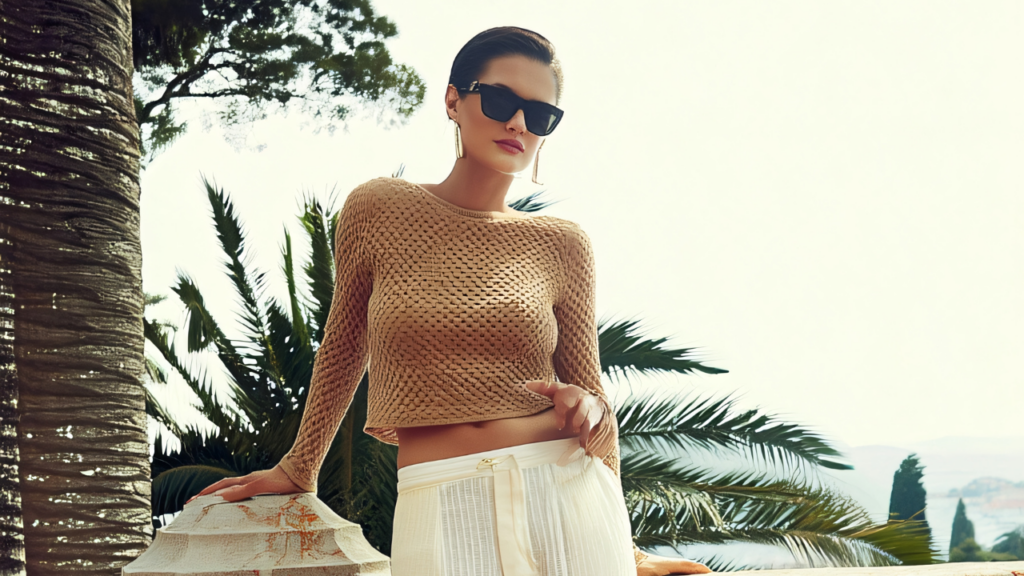
Wearing one color family from head to toe creates uninterrupted height.
Best monochrome shades:
- Ivory
- Camel
- Soft blush
- Charcoal
- Navy
- Black
You don’t need contrast to be seen.
You need consistency that makes your body look like a single line.
3. Define Your Waist — It’s Your Power Point
Petite women are often told to “avoid curves.”
Wrong.
A defined waist gives your silhouette shape and proportion.
Try:
- high-waisted trousers
- wrap dresses
- belted blazers
- cropped knits with tailored bottoms
Proportion = elegance.
Elegance = height.
4. Choose Strategic Hemlines
The right hem is everything when you’re petite.
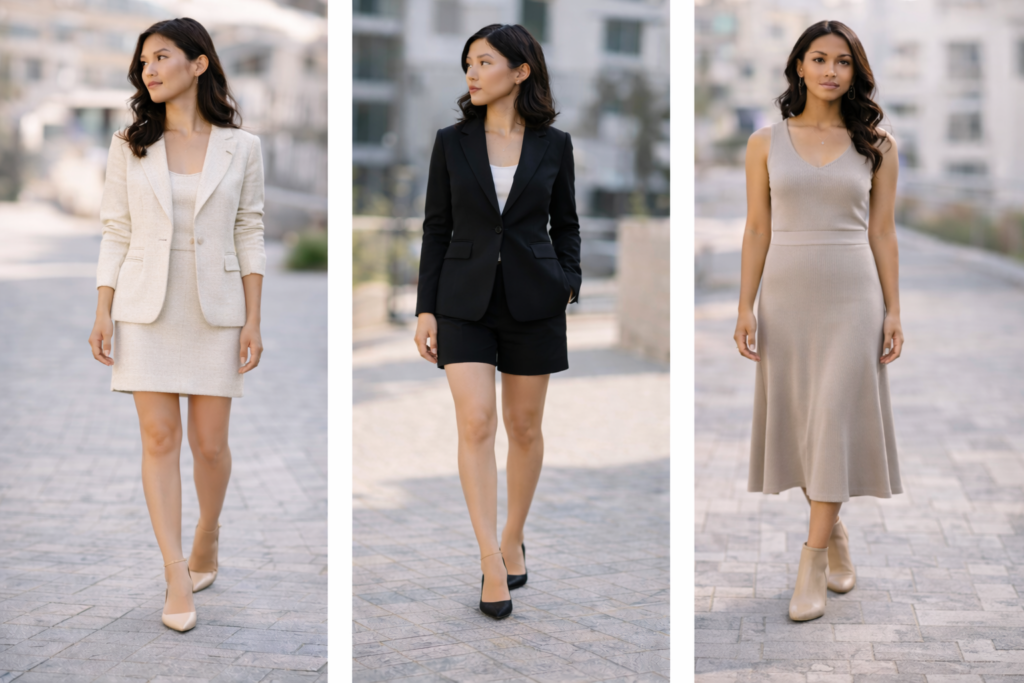
Rule:
Mid-thigh to above the knee = yes
Mid-calf without heels = no
Midi skirts are gorgeous, but pair them with:
- pointed heels
- slingbacks
- ankle boots with a slim toe
Never with bulky shoes.
5. Your Shoes Send a Message
Pointed toe = instant height.
Almond toe = soft, feminine elevation.
Slingbacks = long lines without aggression.
Avoid:
- chunky platforms
- rounded toe sneakers
- thick sole sandals
Comfort should enhance you — not swallow you.
6. Long Layers Elongate the Body
Short jackets cut you in half.
Longline pieces pull you upward.
Think:
- trench coats
- longline blazers
- duster cardigans
- tailored coatigans
- silk kimono layers
These move with your walk and extend your frame.
You look taller without trying.
7. Petite Accessories: Small, Not Loud
Oversized bags overwhelm petite frames.
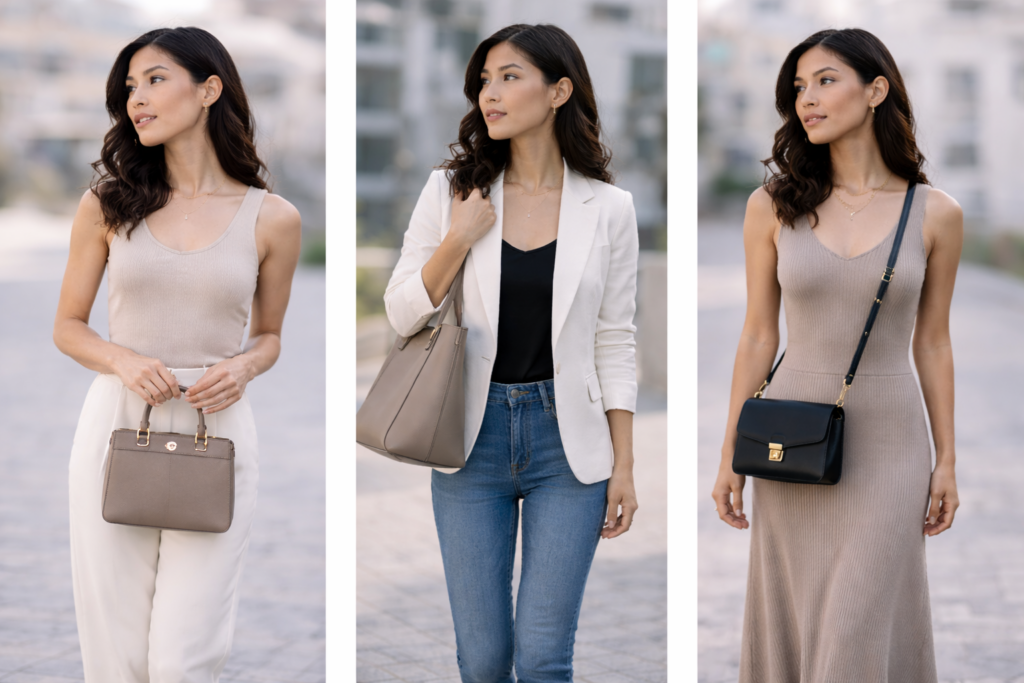
Choose:
- structured mini-carry
- mid-size totes
- slim crossbody
- leather backpacks in neutrals
Gold jewelry > chunky maximalist pieces.
You don’t need drama —
you need balance.
The Petite Woman’s Style Formula
When in doubt, use this:
Vertical lines + monochrome + defined waist + pointed toe + long layer
Put these elements together and you will look:
- taller,
- slimmer,
- more elegant,
- and more confident.
This is the how to look taller for petite women strategy stylish women have used for decades —
because it works in every era.
Final Thoughts
Petite doesn’t mean “small.”
It means your proportions are different — and when you dress with intention, you become unforgettable.
You don’t need height to own a room.
You need presence, posture, and a wardrobe that reflects who you are becoming.
If you want outfit inspiration that puts these principles into practice, explore 10 Flattering Outfits for Women to Look Taller, where I break down elegant looks that visually lengthen your silhouette.
With pleasure,

Disclaimer: Content published in The Journal is based on personal experiences, research and editorial perspectives and is intended for informational and educational purposes only. It is not a substitute for professional advice, diagnosis or treatment. See Terms & Conditions.




Leave a Reply